










For a long time, the mental image of a digital nomad came with a standard backdrop: rice terraces, a cold Bintang, and the faint sound of a scooter revving somewhere in Canggu. Bali defined the aesthetic. It shaped the expectation. However, something has quietly shifted in the global remote work conversation, and the island that once seemed like the only answer is now losing ground to an unlikely challenger on the other side of the world.
A growing number of remote workers are skipping the crowded cafes of Canggu for the startup buzz of Nairobi. Kenya’s capital, long nicknamed the “Silicon Savannah,” is no longer just a destination for tech investors and NGO workers. It’s becoming a genuine base for location-independent professionals, and there’s a stack of real data behind the trend.
Bali Is Showing Its Cracks

The case for leaving Bali isn’t purely about finding something new. It’s partly about what Bali has become. In 2024, a record-breaking 6.3 million international tourists visited the Indonesian island, pushing its infrastructure and environment to their limits. That scale of footfall comes with real consequences for people trying to work productively on a daily basis.
Housing prices have doubled in key nomad hubs like Canggu, Ubud, and Seminyak, driven by increased demand from influencers, developers, and global expats. What once cost around $800 per month now easily exceeds $2,000, without significant improvements in services. For a community built around stretching income while traveling, that math simply doesn’t work anymore.
In 2025, many digital nomads report burnout from the party-heavy, influencer-driven culture that now dominates places like Canggu. What used to be a place for productivity and quiet inspiration has become more about social appearances, brand deals, and noise. The search for something more purposeful is real, and Nairobi is one of the destinations catching that wave.
What Actually Is the Silicon Savannah?

Nairobi is rapidly gaining a reputation as an African high-tech hub and has garnered the name “Silicon Savannah,” a nod to the tech startup scene from the original Silicon Valley in California, only in this case, the startups are surrounded by stunning safari lands, elephants, giraffes, and lions. It’s an unusual combination, but it’s real.
Many of the big tech companies already have a presence in Nairobi, including Microsoft, Amazon AWS, Facebook, IBM, and Google, to name a few. Beyond the global giants, the city has cultivated its own innovation layer. What seems particularly exciting is the combination of fintech and socially oriented projects that are not just providing convenience but solving real problems in a place where infrastructure and basic technology are still developing compared to more advanced nations.
Kenya’s digital economy was projected to grow from roughly 5.9% of GDP in 2023 to 9% by 2025. The ICT market, valued at around $10.5 billion in 2024, is expected to reach nearly $15 billion by 2030, driven by sustained sector demand. Those are not the numbers of a destination running on hype.
A Brand-New Visa That Changes Everything

Kenya has introduced the Class N Digital Nomad Permit, a new visa designed for remote workers and digital nomads who wish to live and work in the country. It was announced by President William Ruto on October 2, 2024, at the Magical Kenya Travel Expo. The timing was deliberate. Kenya is actively building its image as a global talent destination, not just a safari stop.
With the launch of the Kenya Digital Nomad Visa, remote workers can now live and work legally in Kenya for up to a year, without worrying about border runs or visa extensions. Applicants need proof of remote work, an income of approximately $53,922 per year, accommodation, a clean criminal record, and health insurance. Income earned outside Kenya is not taxed under this visa.
The introduction of the permit aligns with Kenya’s broader economic and tourism strategy. The government is committed to attracting 5 million visitors annually by 2027 and enhancing Kenya’s global competitiveness. The visa isn’t a standalone move; it’s part of a coordinated national strategy.
Internet and Infrastructure: Better Than You’d Expect

Kenya’s digital transformation continues to gain momentum, with the latest Sector Statistics Report by the Communications Authority of Kenya revealing a remarkable increase in the uptake of mobile, broadband, and digital services in the 2024/2025 financial year. The rollout of mobile cellular networks saw 4G and 5G coverage rise to 97.3% and 30% of the population, respectively. Those figures beat many countries considered established nomad hubs.
As of June 2025, total data subscriptions had grown to 58.5 million, marking a 27.3% increase from the previous year. Of these, nearly four in five were on mobile broadband, with 4G services accounting for the dominant share of broadband subscriptions. For remote workers who rely on stable, fast connections, this matters enormously.
Kenya has quickly become a top destination for digital nomads in Africa for its unique blend of white sand beaches, abundant national parks, and vibrant capital city. It helps that Kenya has the best 4G+ networks in East Africa. You’ll never struggle to stay connected no matter whether you’re in the middle of a city or in the bush on safari.
Coworking Spaces and the Working Day in Nairobi
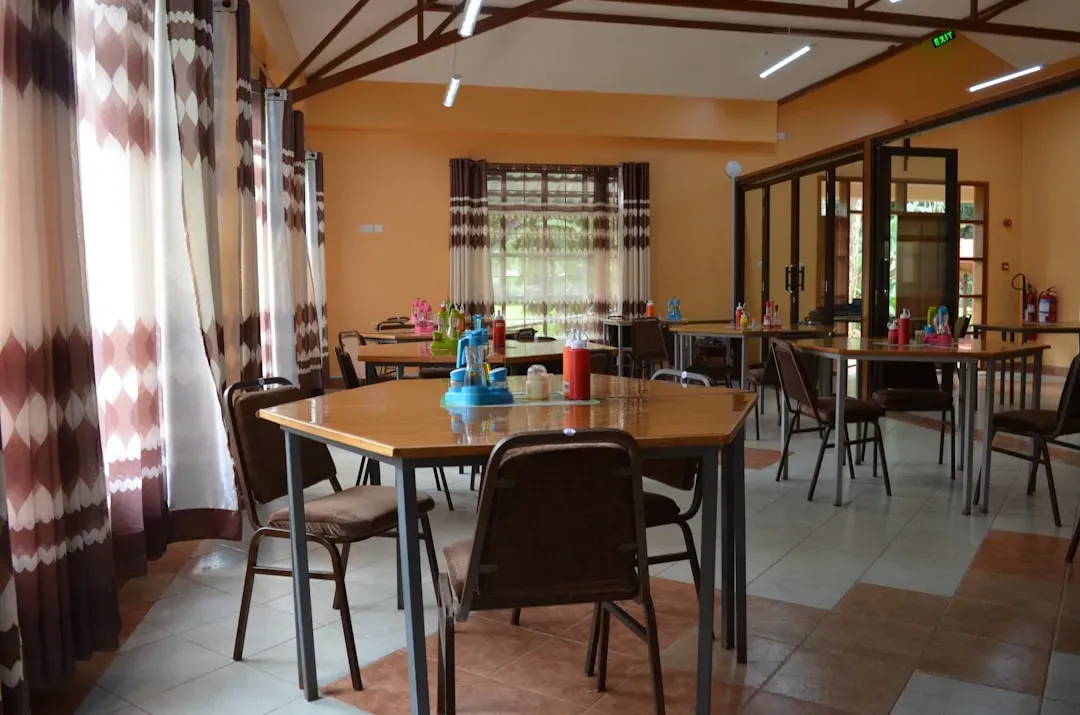
Nairobi, often called “Silicon Savannah,” is home to a burgeoning tech scene, with numerous coworking spaces, tech hubs, and networking opportunities for professionals in the digital space. The practical infrastructure for remote work is genuinely solid. Spaces like The Foundry Africa and Ikigai Nairobi provide dynamic environments conducive to collaboration, networking, and productivity. These hubs offer modern amenities such as high-speed internet, meeting rooms, and communal areas, fostering an atmosphere of creativity and innovation.
Daily coworking access in Nairobi runs roughly $17 per day. Nairobi Garage, the pioneer coworking space operator in the city, has several spots across Nairobi including in the popular Westlands area, Karen, Kilimani, and Spring Valley, offering coworking spaces, meeting rooms, a club space, and private offices. Monthly memberships, by comparison, are competitive with cities in Southeast Asia.
High-quality coworking spaces such as Nairobi Garage and Skippers Coliving in Diani thrive on demand from remote workers. These facilities require and facilitate investment in premium digital infrastructure, including high-speed fibre internet and reliable backup power systems. This infrastructure, demanded by remote workers, benefits local Kenyan startups and tech entrepreneurs who share these modern facilities, enhancing the overall dynamism of the Silicon Savannah environment.
The Cost of Living Reality

East Africa stands out as one of the world’s most promising destinations for digital nomads. Affordable living costs, averaging around $1,377 a month in Kenya, combined with a strategic time zone overlap with European markets and a growing tech ecosystem anchored in Nairobi’s Silicon Savannah, make the region uniquely competitive. For context, that average compares well against many cities in Southern Europe that nomads have historically favored.
A typical breakdown for a digital nomad in Nairobi includes rent from roughly $180 to $450 per month for a one-bedroom apartment, meals at mid-range restaurants around $4.50 to $9, and coworking memberships between $90 and $180 per month. Street food and local transport remain cheaper still. In Kilimani, one of the popular neighborhoods for expats, you can rent entire furnished residences for as little as $26 per night.
The coliving market is also developing quickly. Coliving hubs in Westlands, Nairobi’s commercial and nightlife district, run between $58 and $82 per night, depending on room type and length of stay. In a typical coliving house, the fee covers accommodation, power, high-speed internet with multiple backup connections, coworking setups, regular housekeeping, and access to amenities such as a pool, small gym, or yoga studio.
A Thriving Global Nomad Community Is Already There

The digital nomad lifestyle has surged in popularity, with 40 million people worldwide now working remotely while traveling, according to Statista’s Digital Nomads 2024 report. As remote work and digital nomadism have become mainstream, a growing number of global professionals are following a similar path, drawn by Africa’s opportunities, affordability, and thriving tech hubs. Kenya is increasingly part of that calculation.
AfricaNomads, a community-based coliving and travel operator, is now expanding into Nairobi, a move its co-founder says reflects the city’s growing status as a remote work hub. MBO Partners data estimated the number of digital nomads in the United States alone at over 18 million in 2024, almost double the 2019 figure, with forecasts that the global population of people living and working this way could reach hundreds of millions over the next decade. Nairobi is positioning itself to absorb a share of that growth.
People are generally very friendly in Nairobi and the sense of community is strong. Social events happen almost every week, making it extremely easy to meet like-minded people while living in the city. That community texture, often undervalued, is one of the things that keeps nomads in a city far longer than they originally planned.
The Konza Technopolis: Africa’s Smart City in the Making

Konza Technopolis, also known as Silicon Savannah, is a large technology hub being built 64 kilometers south of Nairobi. Its location spreads across the counties of Machakos, Makueni, and Kajiado, and it is a gazetted Special Economic Zone. This is Kenya’s most ambitious long-term bet on tech infrastructure, and it’s actively progressing.
Konza Technopolis is a smart city flagship project and a key component of Kenya’s Vision 2030, positioned within the Economic and Macro Pillar under the business process outsourcing sector and related IT-enabled services. In 2024, Konza, along with the Korea Trade-Investment Promotion Agency, launched the third year of an infrastructure program focusing on establishing an incubation complex, a smart farm, and diverse energy sources, aligning with Konza’s green transition and energy independence goals.
By the end of the 2022 to 2023 fiscal year, at least three quarters of the parcels at Konza Technopolis had been committed by investors. For nomads thinking about where to base themselves in the medium term, proximity to a developing tech campus of this scale is a significant draw. Not just as a lifestyle backdrop, but as a real professional opportunity.
Real Challenges Worth Knowing

Painting too rosy a picture wouldn’t be fair. Despite advancements, challenges remain, especially outside urban centers, where power cuts and limited infrastructure are common. Nairobi itself has a learning curve, particularly around traffic, navigating certain neighborhoods after dark, and adapting to how the city moves.
While the overall cost of living remains affordable in Nairobi, pressure is heavily concentrated in specific expat-friendly neighborhoods such as Westlands, Kilimani, Lavington, and Riverside. Nomads, who often target mid-to-high tier rentals, typically budget between $500 and $1,000 per month for accommodation, exerting disproportionate pressure on the local rental market. The gentrification dynamic seen in Lisbon and Barcelona is already a conversation in parts of Nairobi.
Crime is a consideration in Nairobi at night, particularly in the city center. Walking alone in unfamiliar areas at night is not advised, and using Uber remains the recommended way to move around after dark. These are manageable realities, but they belong in any honest account of the city.
Why 2026 Might Be Nairobi’s Breakout Year

Kenya’s tech hub status, centered around Nairobi’s Silicon Savannah, is drawing increasing attention from the global tech community. That attention is now being met by government infrastructure, a formal visa pathway, and a coworking ecosystem that has reached a point of genuine maturity. Kenya’s new Class N Digital Nomad Permit is now live, inviting remote workers to base in Nairobi, coastal towns, or game reserve-adjacent hubs.
In Africa, cities like Nairobi offer a rare combination of temperate weather, relatively good healthcare and schooling, strong internet connectivity, and an ecosystem of tech companies, NGOs, and international organizations that already employ or host foreigners. That ecosystem creates the kind of ambient professional energy that nomads often say they miss when they settle in pure beach destinations.
More nomads are exploring Colombia, Kenya, and the Philippines for affordability and visa ease going into 2026. The trajectory is clear. The digital nomad lifestyle has surged in popularity, with 40 million people worldwide now working remotely while traveling, according to Statista’s 2024 data. Where those people choose to go next, the evidence increasingly points somewhere past Bali.
Conclusion: Not a Replacement, But a Real Alternative

Nairobi isn’t trying to be Bali with a different backdrop. It offers something structurally different: a functioning tech economy, a fast-developing smart city, a formal visa structure, and an urban culture that goes well beyond surf and sunsets. Often referred to as the Silicon Savannah, Nairobi is at the forefront of Africa’s tech revolution. That’s not tourism marketing; it’s a description that global companies and venture investors are already backing with real money.
The nomad community has always followed value, meaning genuine quality of life relative to cost, not just low prices. Affordable living costs, a strategic time zone overlap with European markets, and a growing tech ecosystem make the region uniquely competitive. This convergence of affordability, innovation, and global connectivity positions East Africa not just as a stopover but as a viable hub for digital talent and investment.
The savannah that inspired the nickname is visible from the edge of the city. Nairobi National Park sits just beyond the downtown skyline, the only urban national park of its kind anywhere in the world. Working in a city where you can watch wildlife during your lunch break and still make a European afternoon call is, on reflection, a pretty good deal.
<p>The post Forget Bali: Why Digital Nomads Are Flocking to This Kenyan “Silicon Savannah” Instead first appeared on Travelbinger.</p>